AMD's AI desktop: what the Ryzen AI Halo costs, and what it can really do
AMD's tiny Ryzen AI Halo runs huge AI models without the cloud. It costs $3,999 with 128GB, and from $7,299 for the new 192GB model. The prices, the specs, the video of Lisa Su's demo, and an honest look at what fitting in memory does and doesn't mean.

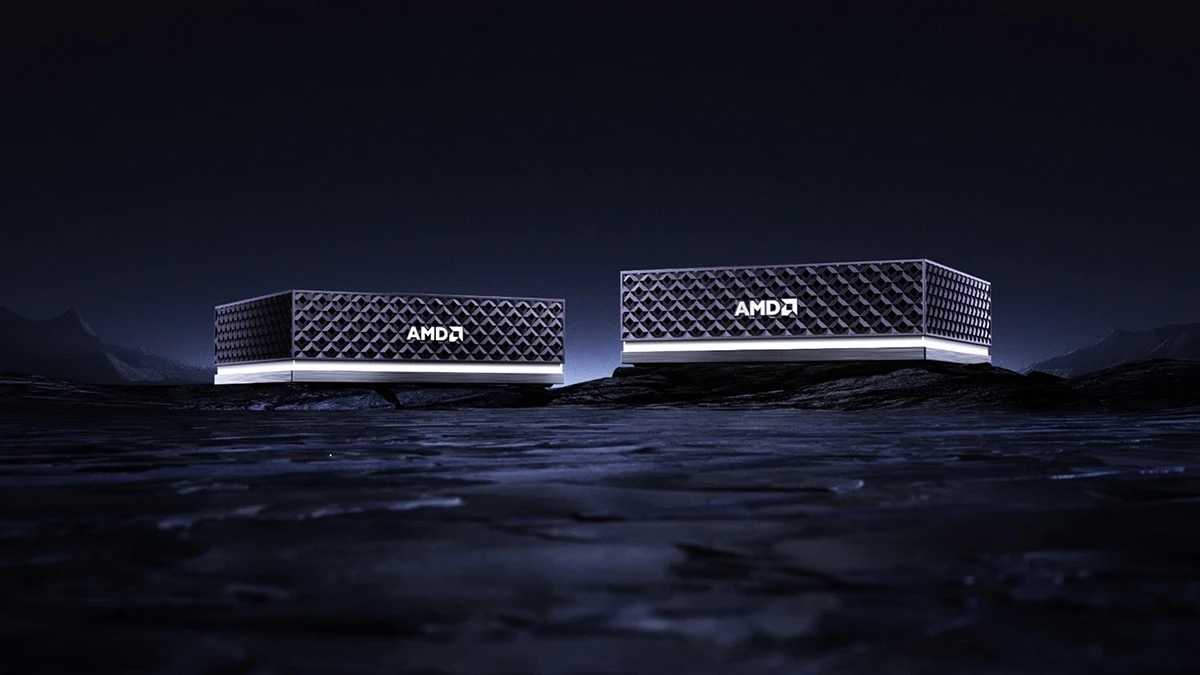
I build software that runs AI on people's own machines, so a post about AMD's CEO showing off a tiny AI computer was always going to get my attention. This LinkedIn post by Silicon Valley's Journal shows Lisa Su with a compact system that can run models of up to 200 billion parameters without the cloud. Its argument: the next big shift in AI may happen on your desk.
The machine is the AMD Ryzen AI Halo. The post doesn't mention prices, and it describes the 128GB version, which is no longer the newest. So here are the current models, what they cost, and how far that “on your desk” promise really goes.
The video
What it is
The Ryzen AI Halo is, in AMD's words, its first compact developer platform for local AI. It's about 15 × 15 cm and weighs under 1.2 kg. The trick is unified memory: the CPU, graphics and NPU share one large memory pool, so a big model can fit where a normal PC would run out of room. It works with tools developers already use, like PyTorch, vLLM, llama.cpp, Ollama, ComfyUI and LM Studio.
The prices
| Machine | Memory | Price |
|---|---|---|
| Ryzen AI Halo (Max+ 395) | 128GB | $3,999 |
| Ryzen AI Halo (Max+ PRO 495), newest | 192GB | from $7,299 |
| For comparison: NVIDIA DGX Spark Founders Edition | 128GB | $4,699 |
Both Halo models come with a 2TB SSD and, according to AMD and HotHardware, are sold exclusively at Micro Center, a US retailer. These are US prices without sales tax, as reported in early November 2026. The 192GB model launched in October, and it nearly doubles the price for 50% more memory.
In Europe I couldn't find an official Halo price or availability. The closest guide is other manufacturers' mini PCs with the same 192GB chip: at IFA 2026, Igor's Lab reported about €5,000–6,000 for a Minisforum and around €8,000 for an Acemagic. Those were trade-fair figures, not final list prices.
Specs side by side
| Max+ 395 | Max+ PRO 495 | |
|---|---|---|
| CPU | 16 cores, 32 threads | 16 cores, 32 threads |
| Graphics | Radeon 8060S, 40 CUs | Radeon 8065S, 40 CUs |
| NPU | 50 TOPS | 55 TOPS |
| Memory | 128GB LPDDR5X-8000 | 192GB LPDDR5X-8533, up to 160GB for graphics |
| Largest models (AMD's claim) | up to 200 billion parameters | 300 billion and up, at 4-bit quantization |
| Operating system | Windows 11 or Linux | Linux now, Windows reported to follow |
Fits in memory is not the same as fast
This is the part I'd want a friend to know before spending the money. The 200-billion figure says a model fits, not how quickly it answers. AMD's claims are also AMD's: StorageReview's review of the 128GB model reports the claim but didn't test a 200-billion model.
What it did test is telling. Serving models to many requests at once, the Halo trailed NVIDIA's DGX Spark by about 2 to 4 times in most scenarios. The Spark also has much faster networking for linking machines. The Halo won elsewhere: faster CPU work in several tests, and it runs Windows or Linux, while the Spark is Linux only. StorageReview's conclusion is roughly that the Spark suits maximum local speed, and the Halo suits people who want one full PC for both daily work and local AI.
Could it replace your AI subscriptions?
The source post asks exactly this, and its comment section pushes back hard, for good reason. My own take, as someone who ships local AI:
- Privacy is the strongest reason. Contracts, patient notes and customer data never leave the building. For European businesses that's a real advantage, as I wrote in my Mistral Large 4 post. It's also why I built LOKIDocs.
- Cost is the weaker reason. $3,999 is 20 months of a $200 subscription, and that subscription gives you the very largest models, which a desktop won't run. If you only want to save money, a cheaper plan or the API will usually win.
- No usage limits matters for agents. Long-running agents and batch jobs can run all night on hardware you own, with no meter running.
- You can start much cheaper. Try your real workload on smaller local models, or on NVIDIA's free endpoints, before buying anything.
For most people, I think the source post gets it right in the end: cloud AI isn't going anywhere, and the future looks like a split between big datacenters and small computers on our desks. The interesting news is that the small ones have become serious.
Prices and availability change quickly, so check with the retailer before buying. I couldn't open Micro Center's page directly, so the prices come from the reports linked here.
Sources
- Silicon Valley's Journal on LinkedIn: post and video
- AMD: Ryzen AI Halo and Ryzen AI Max PRO 400 Series (20 May 2026)
- HotHardware: the 192GB Ryzen AI Halo (13 October 2026)
- StorageReview: AMD Ryzen AI Halo review (6 July 2026)
- Tom's Hardware: AMD challenges the DGX Spark at $3,999
- VideoCardz: launch at $7,299
- Igor's Lab: 192GB mini PCs at IFA 2026 (7 September 2026)
- Micro Center: AMD Ryzen AI Halo
Share this post
Help others discover this content by sharing it on your favorite social networks!
Subscribe to my Newsletter
Stay informed with the latest updates and insights.
We'll never share your email with anyone else.
admin
Senior Fullstack Developer
Thank you for reading my blog post! If you found it valuable, please consider sharing it with your network. Want to discuss your project or need web development help? Book a consultation with me, or maybe even buy me a coffee ☕️ with the links below. Your support goes well beyond a coffee drink. Its a motivator to keep writing and creating useful content.
Related Posts
All essays →- Nov 2, 2026
The $6.3 billion Binance hack: what happened, and how to protect your crypto
- Oct 27, 2026
World of Warcraft: Forever: eighteen years later, I'm tempted to log back in
- Oct 15, 2026
Free AI from NVIDIA: a practical guide to build.nvidia.com
- Oct 9, 2026
Nominated as Business Innovator: a letter I opened standing up