Google Limits Search to 10 Results Per Page: SEO, AI, and Visibility
Google quietly removed support for showing 100 results per page. The change is reshaping SEO data, AI training inputs, and who gets discovered online.

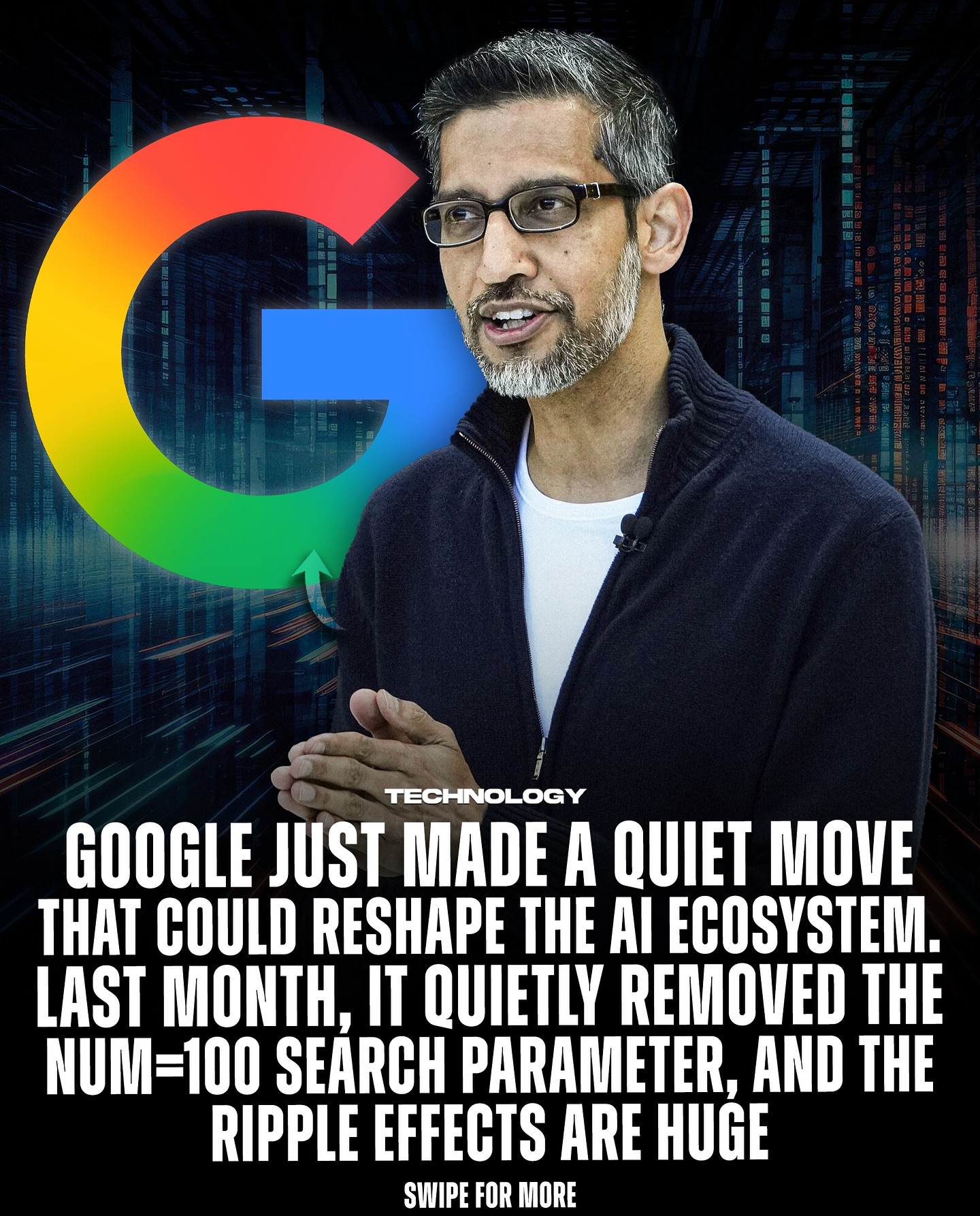
🔎 Google Quietly Narrows the SERP: 10 Results, Full Stop
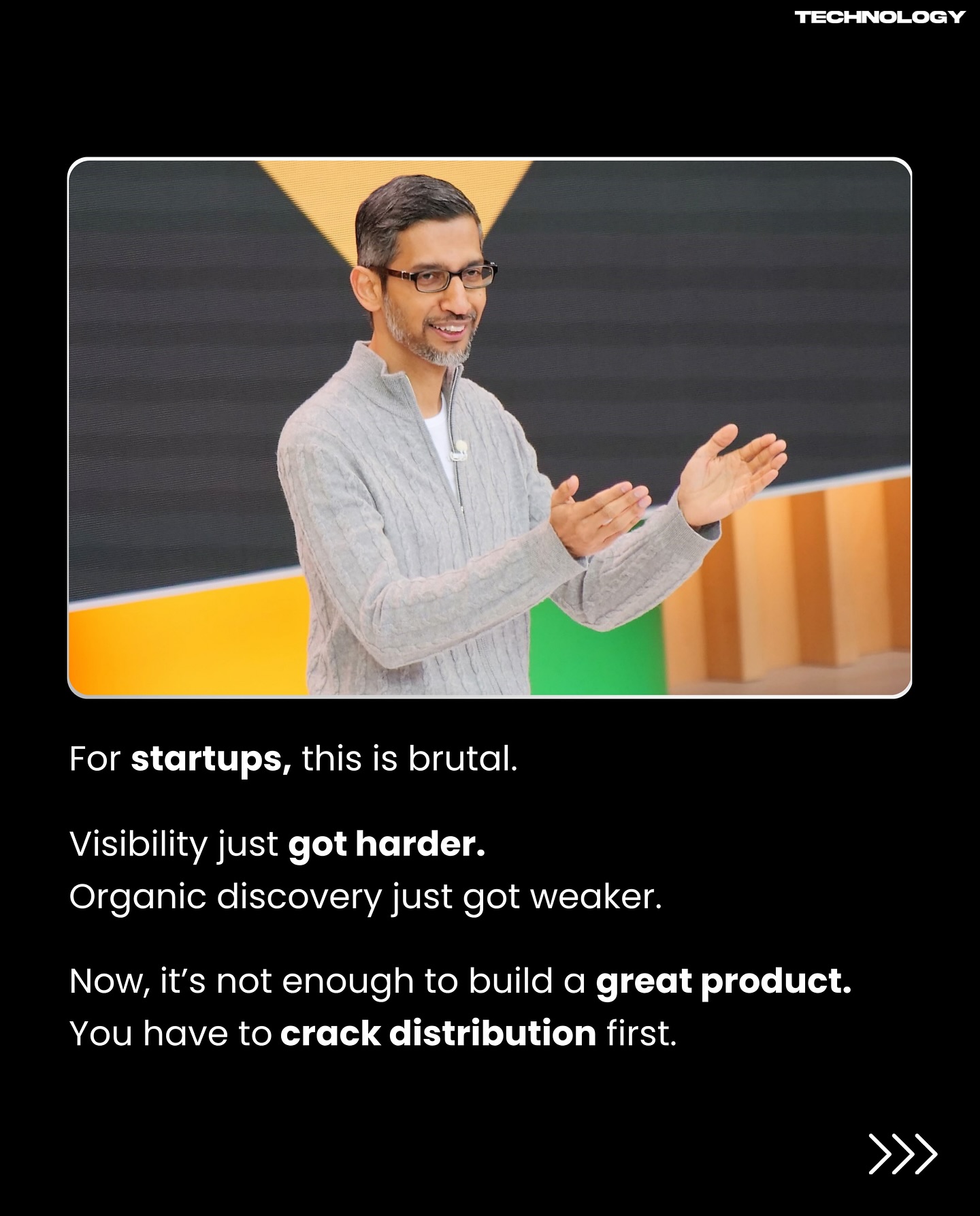
Google has quietly disabled the long-used (but unofficial) URL parameter that showed up to 100 search results per page, leaving only the standard 10. The fallout has been immediate: rank trackers are disrupted, Google Search Console impressions have shifted, and websites beyond the first page now struggle for visibility.
📉 What Changed—and Why It Matters
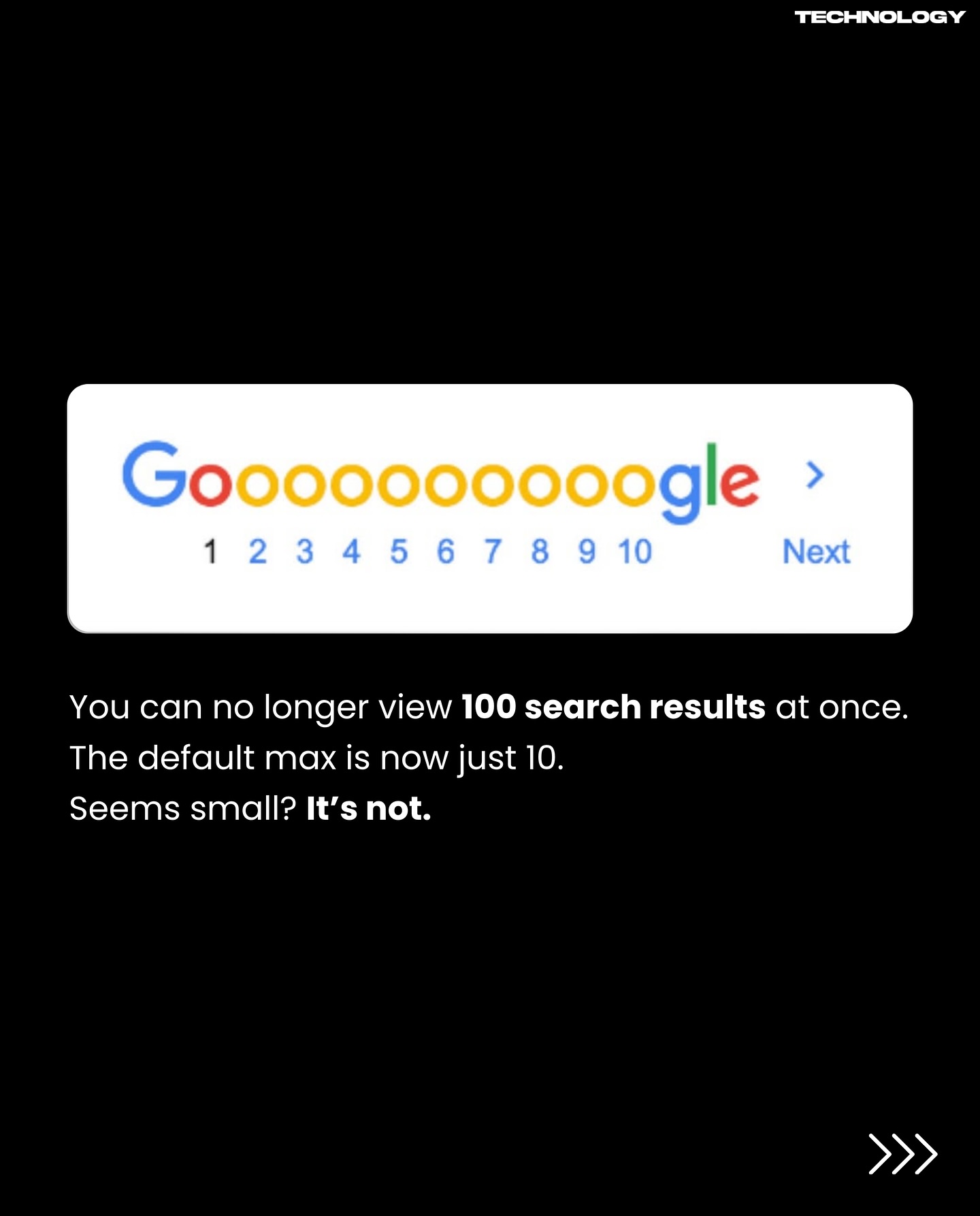
For years, adding &num=100 to a Google search URL would show 100 results per page. That parameter stopped working, and Google clarified it was never “formally supported.” In practice, SEOs and data tools relied on it for broader ranking visibility and cheaper data collection.
Immediate Impacts
- Massive impression shifts: 87.7% of sites saw declines in impressions reported in Google Search Console.
- Rank tracker turbulence: Tools that scraped page 2–10 now need 10× queries to collect the same data.
- Data accuracy debate: Some of the “missing” impressions may have been inflated by scrapers relying on the 100-result parameter.
- Search interface simplification trend: Google is also pruning certain rich result types to streamline SERPs.
- AI Overviews pressure: Separate studies show organic CTRs drop when AI Overviews appear, compounding visibility challenges.
🤖 Beyond SEO: AI Training and the Narrower Open Web
This change goes far beyond rank tracking.
- Training data narrows: Crawlers and AI systems that sample results beyond page 1 now pull less diverse content by default.
- Discovery shifts to “winner-takes-most”: If you’re not on the first page, far fewer models and users will see you.
- Higher acquisition costs: Data collection and evaluation become more expensive for startups building search-related products.
- Content strategy pressure: Brands must compete for top-10 placement or diversify discovery (social, communities, newsletters, partnerships).
Practically, the open web just narrowed: what both users and algorithms can “see” via Google is now much closer to a single-page window.
🧭 Who Feels It Most
- Community-driven platforms: Large threads and long-tail discussions that often rank beyond page 1 will be surfaced less frequently.
- Long-tail and mid-tail publishers: Sites targeting queries where they occupy positions 11–100 will experience measurable drops in impressions and clicks.
- Analytics and SEO vendors: Rank/visibility reports need retooling to avoid misleading trend lines.
🛠️ What To Do Now
Immediate Actions
- Re-benchmark dashboards: Expect lower impressions; track clicks, CTR, and conversions more closely.
- Strengthen page-1 signals: Depth, authority, freshness, helpfulness, and fast UX become even more decisive.
- Diversify distribution: Build owned audiences (email, communities), leverage social discovery, and syndicate where appropriate.
- Adapt rank tracking: Update monitoring to paginate correctly and reduce noise from interface changes.
Strategic Moves
- Invest in intent clusters: Create comprehensive topic hubs that earn multiple top-10 placements.
- Leverage structured data (where useful): Even as some types are deprecated, many still help evaluation and click confidence.
- Measure beyond Google: Track referral mix from alternative search, social, and direct traffic to reduce single-channel risk.
🖼️ Visual Gallery
This gallery showcases related visuals and assets referenced across my posts. It includes the primary SEO image and all available images from the site’s public posts directory.
🎯 Bottom Line
By limiting results to 10 per page, Google has raised the stakes for page-one visibility and reshaped the data landscape for SEOs and AI builders. Re-benchmark your metrics, adapt your tracking, and invest in distribution beyond search—because the open web just got narrower.
Share this post
Help others discover this content by sharing it on your favorite social networks!
Subscribe to my Newsletter
Stay informed with the latest updates and insights.
We'll never share your email with anyone else.
admin
Senior Fullstack Developer
Thank you for reading my blog post! If you found it valuable, please consider sharing it with your network. Want to discuss your project or need web development help? Book a consultation with me, or maybe even buy me a coffee ☕️ with the links below. Your support goes well beyond a coffee drink. Its a motivator to keep writing and creating useful content.
Related Posts
All essays →- Oct 15, 2026
Free AI from NVIDIA: a practical guide to build.nvidia.com
- Oct 9, 2026
Nominated as Business Innovator: a letter I opened standing up
- Oct 8, 2026
Mistral Large 4: Europe finally has a frontier model of its own
- Jan 25, 2026
Nvidia's AI Empire: How Jensen Huang Built the Future of Computing